
Turning a basement into a beautifully finished, functional part of the home really starts with the right team. Skilled basement remodelers are prepared to handle common issues like moisture, insulation, and low ceiling height. They help keep projects efficient and financially controlled.
View Kirkland Basement Remodeling Specialists
It is smart to choose contractors who can show clear credentials such as a current license, liability insurance, and examples of past projects. Contractors with local experience often understand regional code requirements, helping permits move more smoothly and reducing delays. That protects your investment and supports a smooth project.
Collaborating with experienced basement renovation services or a design-build team often makes the remodeling journey much more efficient. Renovate Builders at renovatebuilders.com uses a single-team process that handles design, permitting, and construction together. This approach helps create more predictable schedules while giving homeowners access to trusted suppliers.
When reviewing proposals, focus more on the contractor’s experience and track record than on the lowest bid alone. Experienced professionals tend to offer more reliable timelines and stronger contingency planning because they have seen similar problems before. This way of choosing a contractor can reduce surprises and improve the odds of getting a lasting finished space.
Why Basement Remodeling Experts Matter For Your Home
Converting a dark, damp basement into a cozy living space takes more than basic remodeling skill. Basement renovation specialists help ensure the work meets code, handles moisture properly, and feels like a natural extension of the home. A well-managed project reduces surprises and helps keep the schedule under control.
Working with an expert basement remodel team gives homeowners access to focused below-grade expertise. These teams know how to select materials that perform in humid conditions, plan for egress and ceiling height, and integrate HVAC and electrical systems properly in a basement environment. Those details are important for both safety and long-term performance.
There are several ways professional basement remodelers help safeguard your investment. They are typically licensed, insured, familiar with local codes, and able to document permits and approvals. That reduces the risk of accidents, uninsured damage, or code violations that could hurt resale value.
Detailed estimates from basement finishing contractors allow homeowners to compare bids on a more equal basis. When scope is defined well, homeowners are less likely to face surprise charges or shifting project boundaries. Using a vetted contractor network or a bid-leveling process can improve pricing clarity and material comparisons.
Strong basement remodelers can increase home value by converting underused square footage into functional living area. Once finished, the basement can become a home office, theater, gym, or even a rental suite, which boosts both comfort and marketability. Thoughtful design and strong project management can improve return on investment and support on-time completion.
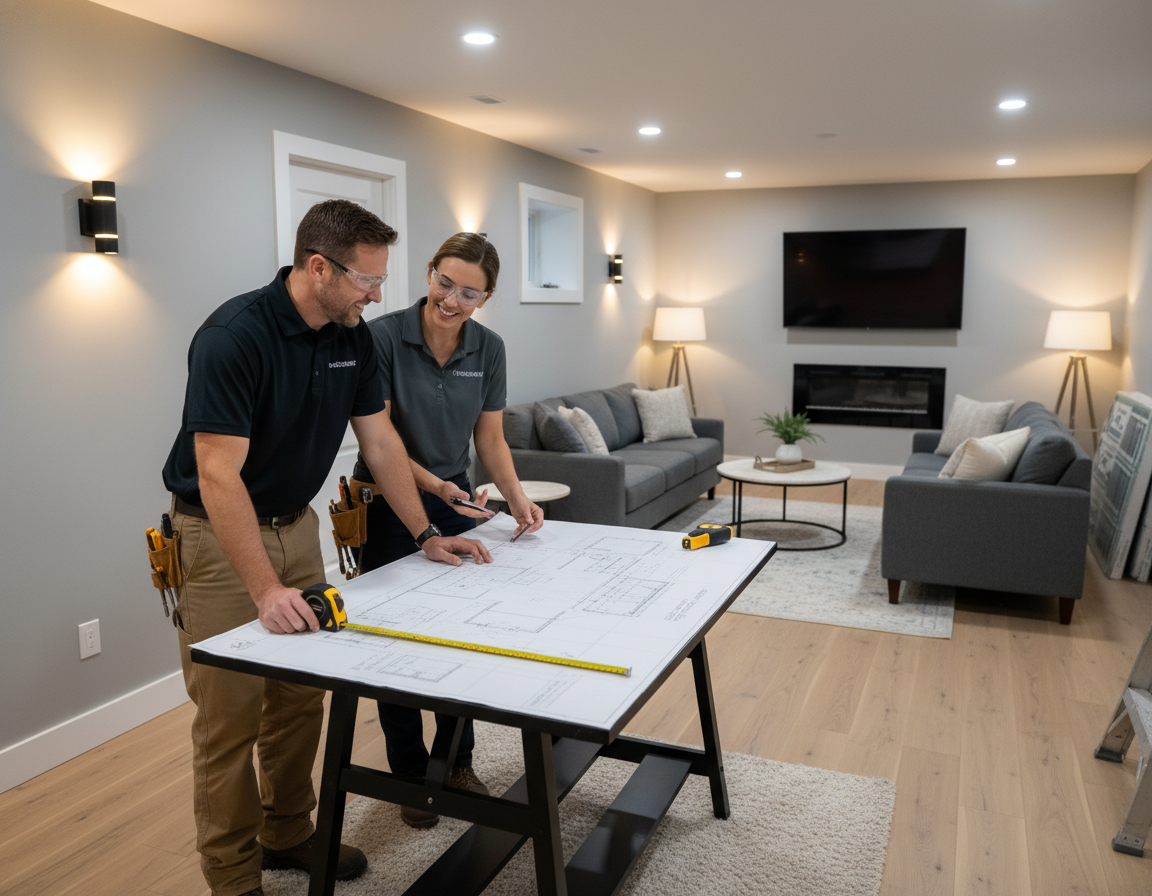
Understanding Basement Remodeling Experts
A basement should not be approached the same way as a standard above-grade remodeling project. Basement Remodeling Experts focus on the unique demands of below-grade spaces. They build custom plans around moisture control, insulation, structural realities, and usable design. A real specialist brings together design, engineering, and construction planning so unexpected expenses are less likely.
How To Recognize A True Basement Remodeling Expert
A genuine basement remodeling expert will usually have a portfolio filled with finished basement projects. They should also be able to explain how layout and finish decisions relate to the home’s foundation, grade, and structural realities. These professionals anticipate drainage concerns, recommend vapor barriers, and suggest lighting and layout solutions for low ceilings and limited daylight.
Credentials To Look For: Licensing, Insurance, And Local Permits
Before signing a contract, verify that the contractor has a valid license and current liability insurance. A professional remodeler should be ready to show that paperwork and describe the permit process in your area. Permits matter because they help ensure compliance with building codes and safety standards. That protection benefits the homeowner long after construction is finished.
Experience Handling Basement-Specific Issues Like Moisture, Insulation, And Low Ceilings
Experienced teams know how to manage moisture control, insulation, and venting so the finished space avoids mold and energy loss. Search for contractors who can discuss waterproofing, drainage systems, structural repairs, and thoughtful solutions for basements with limited ceiling height. That can include techniques like recessed or dropped lighting, concealed bulkheads, and raised subfloor assemblies.
Design-build companies like Renovate Builders provide a more streamlined and integrated remodeling process. By combining designers and trade coordination under one roof, they can often handle permitting and scheduling in a more efficient way. That structure helps identify problems earlier and keeps trades aligned with the budget and schedule.
How To Vet And Choose The Right Professional Basement Remodelers
Choosing the right contractor is one of the most important steps in a successful basement renovation. Start by verifying credentials, confirming real experience, and comparing costs carefully. That process helps you hire a team you can trust. Use local references and documented case studies to verify their track record with moisture control, insulation, and permit work.
Checking Licenses, Proof Of Insurance, And Local Compliance
Ask to see the contractor’s state license and current liability insurance certificate. Make sure coverage limits and workers’ compensation protections are in place to protect both your home and your finances. You should also confirm that the contractor understands local code rules and can explain the permit process clearly.
Contractors who routinely work with local inspectors often bring an advantage to the project. A local top-rated basement remodeling company is usually more familiar with the way regional inspectors and departments operate. Because of that experience, coordination can be smoother and the work may move faster when inspections are needed.
How To Evaluate Portfolios, References, And Case Studies
Review before-and-after images and case studies that reflect challenges similar to the ones in your own basement. Request references from finished projects and make a point of speaking with at least two past homeowners. When you speak with them, ask about communication, schedule reliability, workmanship quality, and surprises during the project.
Look closely for examples where the contractor addressed moisture problems, low ceilings, or built-in storage solutions. An experienced remodeler should be able to explain the trade-offs they faced, the materials they selected, and how they kept the project on schedule.
How To Compare Bids Using Bid-Leveling Principles
Try to collect three to five written estimates that detail the project scope, materials, labor, and schedule. Then use bid-leveling principles so you are comparing equivalent items rather than just headline prices. Be sure to note exclusions, allowances, and the way each company handles change orders.
Transparent bids from basement remodeling experts help reduce the chance of surprise charges later. When your time is tight, vetted contractor platforms may help you narrow the field to more qualified teams. Design-build firms also tend to present consolidated proposals, making side-by-side comparison simpler and responsibility more centralized.
Design-Build Advantages: Streamlined Basement Renovation With A Top Basement Remodeling Company
With a design-build model, one firm manages both the design phase and the construction phase. That is especially important in basement renovations, where structural work, waterproofing, and mechanical systems must often be closely coordinated. A unified team simplifies communication and creates a clearer scope, schedule, and budget from the beginning.
The Design-Build Model And Why It Is Useful For Basement Projects
In a design-build arrangement, architects, engineers, and builders work together as part of one team. Because planning happens together early, issues like moisture routes, framing challenges, or HVAC conflicts can be identified before construction starts. This can significantly lower the chance of costly changes once construction is underway.
How Integrated Teams Reduce Delays And Miscommunication
An integrated team can use stronger project-management systems to coordinate trades, schedules, and decisions. This also gives the homeowner a single point of contact for updates, approvals, and questions. The result is fewer delays, less confusion, and more consistent communication from start to finish.
Access To Quality Materials And Trusted Local Vendors Through A Design-Build Team
Top remodeling companies often maintain strong vendor relationships that support quality materials and dependable delivery times. Basement experts in a design-build setup are also more likely to source products from dependable local suppliers and showrooms. That access can improve installation quality and make warranties or follow-up service easier to manage.
Renovate Builders uses the design-build model to provide coordinated trades, more predictable timelines, and trusted material sources. That method helps homeowners move from the initial concept to the finished basement with fewer surprises and more centralized accountability.
What Happens During A Professional Basement Remodel
When you hire experienced basement renovation professionals, the process should follow a clear sequence from the first site visit to the final walkthrough. That structure is designed to balance site realities, code requirements, and design priorities. A more structured process generally leads to fewer surprises.
Typical Project Phases: Assessment, Design, Permitting, Construction, And Final Walkthrough
A professional basement remodel generally starts with a site assessment that looks closely at moisture, structural issues, and egress requirements. Experienced professionals will document the current conditions and suggest mitigation steps before the design phase moves forward.
After assessment comes design, which is when the layout, finish selections, and system plans are developed. Depending on complexity, this stage may take one to three months.
Permitting and compliance review come next, and basement remodeling experts typically handle the coordination of local approvals and required inspections before work begins.
Construction then moves through demolition, structural work, rough systems, insulation, and finish installation. At this point, trade coordination becomes especially important, and inspections often happen at key milestones.
A final walkthrough and punch-list stage usually close out the job. At that point, remaining issues are identified and resolved so the finished basement matches the agreed scope and quality level.
How Long Full Basement Finishing Usually Takes
A strong contractor should provide a clear timeline with milestone dates rather than vague promises. For a full basement finish, the total project may run from several weeks to a few months depending on scope, permits, and mechanical work.
Smaller projects with lighter cosmetic scopes are usually completed faster. More involved remodels, especially those with structural revisions, bathroom additions, or HVAC changes, normally take longer.
Transparent schedules from basement finishing contractors help homeowners plan around disruption and follow progress more confidently.
Common Basement Remodeling Scope Items From Moisture Control To Finish Carpentry
Moisture control is one of the first and most important priorities in a basement renovation. That can include interior drainage, waterproof membranes, sump pumps, and repairs to specific trouble areas.
Insulation and vapor management come next because they improve comfort and energy performance. Experienced contractors typically suggest products that fit the climate zone and meet local code standards.
HVAC and electrical work are often upgraded to support the new living space properly. Licensed trades are commonly responsible for ductwork, heating zones, electrical load planning, lighting, and final connections.
If the basement will include a bathroom or wet bar, the plumbing design must be handled carefully because this work can be invasive and costly. Basement remodeling experts often design these spaces in ways that reduce demolition and help control cost.
Finish carpentry, trim, cabinetry, and flooring complete the project and give the basement its final identity. Renovate Builders manages these finishing stages, sources materials locally, oversees permitting, and acts as one point of contact through the entire process.
Important Questions To Ask Before Hiring Basement Renovation Professionals
Before signing any agreement, ask for the contractor’s license number and proof of liability insurance. Make sure they handle local permits and follow building codes in your area. If Renovate Builders is one of the companies you are evaluating, ask for their licensing and insurance details directly so you can verify that everything is current and compliant.
Ask about specific experience rather than general remodeling claims. Find out how many basement projects they have completed and ask to see photos and references from past clients. A qualified and experienced team should be able to support its claims with documented examples and past client contacts.
Whenever possible, collect three to five itemized estimates and compare them carefully. Use bid-leveling to evaluate differences in scope, exclusions, and timeline rather than simply focusing on price. Top basement remodeling companies often help homeowners interpret the numbers so fewer surprises appear later.
Ask how the design-build workflow is organized and who your main contact will be during the project. Ask how they manage design changes, change orders, and timeline adjustments if conditions change mid-project. It is also wise to ask about supplier relationships and where finish materials come from. Strong remodelers are generally able to explain how they balance finish quality, labor cost, and long-term performance.
Finally, confirm the practical logistics of the project before making a decision. Ask whether they are truly local, when they could start, how disruption will be managed, and what happens if delays occur. A reliable contractor should be able to provide a proposed schedule, a detailed estimate, and a clear communication plan that gives homeowners confidence.
Related: Portland’s Basement Junk Removal – Extra Costs for Hazardous Items Explained